


Union Budget 2026–27: Infrastructure-Led Growth to Strengthen Real Estate Sector Outlook
The Union Budget 2026–27 has reinforced the government’s long-term commitment to infrastructure-led economic growth, setting a positive tone for India’s real estate sector. With increased capital expenditure, continued focus on urban development, and policy support for housing and connectivity, the budget is expected to strengthen real estate demand across residential, commercial, and industrial segments.
Infrastructure as the Backbone of Real Estate Growth
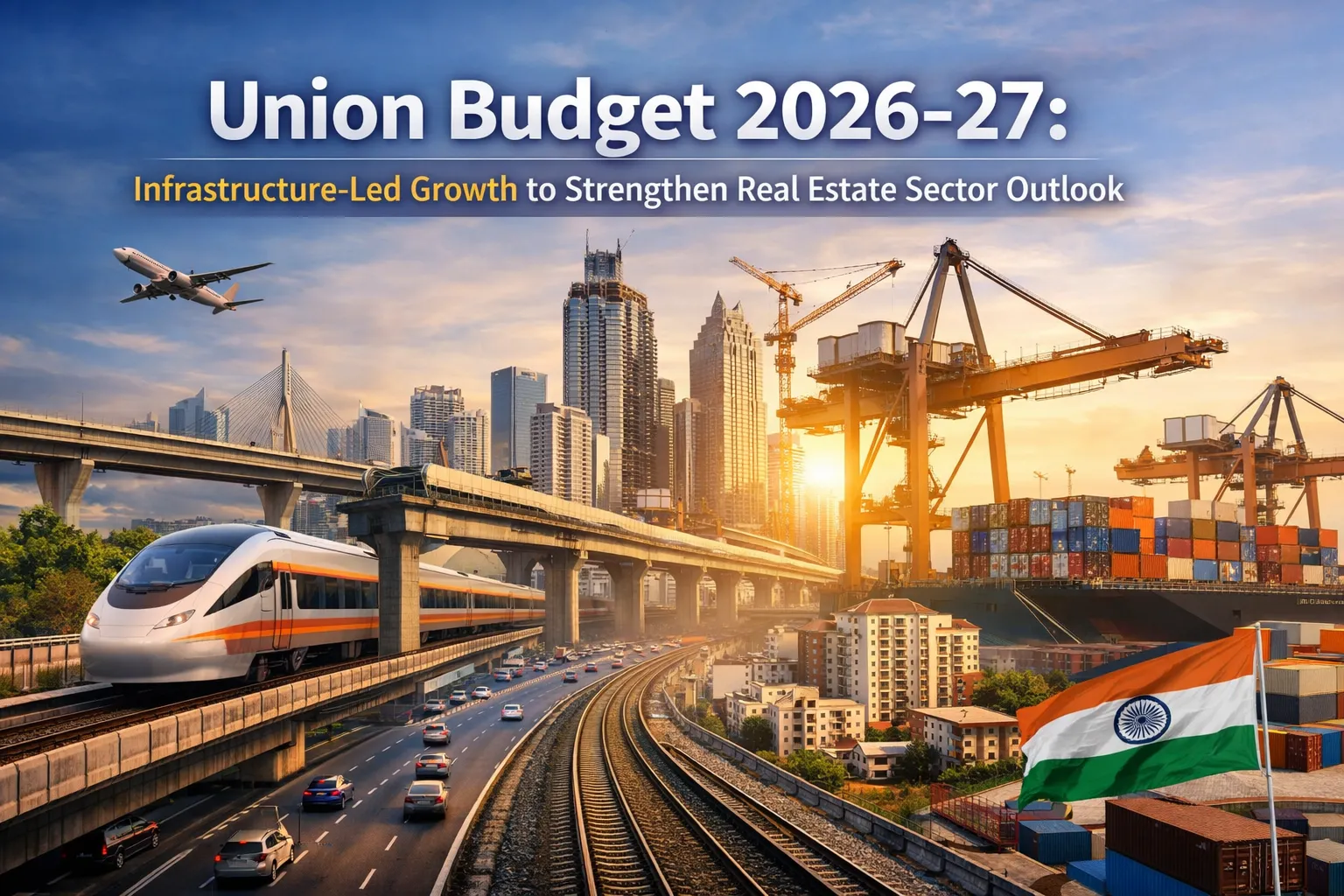
Infrastructure development and real estate growth have always gone hand in hand. The Union Budget 2026–27 places strong emphasis on investments in roads, highways, railways, metro projects, airports, and logistics corridors. Improved connectivity not only boosts economic activity but also unlocks new real estate corridors, particularly in suburban areas and emerging cities.
Large-scale infrastructure projects reduce travel time, enhance livability, and increase the attractiveness of surrounding regions, leading to appreciation in land and property values. This trend is especially evident around metro rail expansions, expressways, and industrial corridors.
Boost to Urban Development and Housing
The budget continues to prioritize urban transformation through sustained funding for smart city initiatives, affordable housing, and urban infrastructure upgrades. Programs focused on water supply, sanitation, and sustainable urban planning improve overall quality of life, directly impacting residential real estate demand.
Affordable and mid-income housing segments are expected to benefit from policy continuity and improved access to financing. Stable regulatory frameworks and infrastructure support are likely to encourage both developers and homebuyers, particularly in Tier-2 and Tier-3 cities.
Positive Outlook for Commercial and Industrial Real Estate
Infrastructure-led growth is also a major catalyst for commercial and industrial real estate. Enhanced logistics infrastructure, industrial parks, and freight corridors are driving demand for warehouses, data centers, and manufacturing hubs.
At the same time, improved urban infrastructure supports the growth of office spaces, IT parks, and mixed-use developments. As businesses seek well-connected, future-ready locations, cities with strong infrastructure pipelines are likely to attract higher institutional investment.
Encouraging Investment Sentiment
Consistent government spending on infrastructure sends a strong signal to domestic and global investors. Real estate, as a long-term asset class, benefits from this stability and policy clarity. Infrastructure-driven development reduces project risk, improves cash flows, and enhances return potential, making the sector more attractive for institutional investors, REITs, and private equity players.
Growth Opportunities in Emerging Markets
One of the most notable outcomes of infrastructure expansion is the rise of new real estate markets. Tier-2 and Tier-3 cities are emerging as attractive investment destinations due to better connectivity, lower land costs, and growing employment opportunities. The Union Budget 2026–27 is expected to accelerate this shift, decentralizing real estate growth beyond major metros.
